Workflow · the ritual
The screencast recording checklist: ninety seconds before the red light
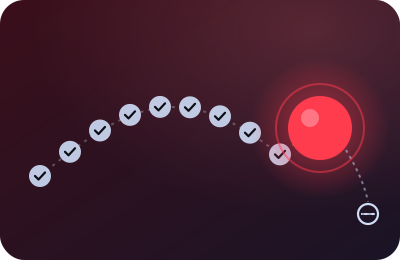
Every ruined take we've ever done the post-mortem on died from something checkable. So: nine checks, ninety seconds, ordered by how often each one is the killer. Run it before every session — not from memory, from the list. Pilots with ten thousand hours still read theirs.
- 1Right mic
- 2Chain state
- 3No extra processing
- 4Levels
- 5Proof take
- 6Notifications off
- 7Room sweep
- 8Script marked
- 9Slate
Before REC: the nine
- Right microphone, on purpose. Open the recorder's input menu and read the device name aloud. Docks, monitors, and wireless earbuds all volunteer themselves as microphones, and every one of them narrates like a voicemail from 2009. The single most common killer — which is why it's check one.
- Chain state: suppression where you decided it lives. You made the live-vs-cleanup decision once; verify today's session matches it. If a layer like Krisp is your chain, confirm the recorder points at it and it points at your real mic. If it's OBS's filter, confirm the filter's still enabled on the right source. Chains drift after OS updates; trust nothing rebooted.
- No uninvited processing. Meeting and chat apps latch "helpful" voice processing onto input devices and leave it running. Quit them for the session. On Windows, keep device-level enhancements off; on a Mac, quit the apps that think they own your mic.
- Levels at narration volume, meter watched. Speak two real sentences the way you'll actually narrate. Peaks in the −12…−6 dB zone, ceiling untouched — the field guide's ritual, run fresh because gain settings reset when you least expect it.
- The ten-second proof take. Record, play back, in headphones. Ears catch what meters can't: the hum you've stopped hearing, the crackle on plosives, the wrong-device muffle that somehow survived check one. Ten seconds here refunds hours.
- Silence the interruption machines. System notifications to do-not-disturb; phone out of the room or airplane-mode face down; calendar checked for the meeting that would otherwise ring through minute nineteen. (Your recorder captures system sounds more faithfully than you'd like.)
- Room schedule sweep. Ten seconds of honest listening with eyes closed: HVAC about to cycle? Neighbor's mowing hour? Kettle still rumbling? Steady noise is your chain's job; scheduled noise is your calendar's. The cheapest suppression remains recording when the building is asleep.
- Script marked, water within reach. Punch-in marks (¶) at every seam, landmine words underlined and said aloud twice, one glass of water at arm's length. This is the retake-free method's pre-flight — the checks that protect the performance, not just the signal.
- Slate the take. "Module four, take one." Two seconds that timestamp the file, wake the speaking voice, and formally end the checklist. Now the red light.
After you stop: the plus-one
Thirty seconds of room tone before the recorder stops rolling. Say "room tone," sit still, breathe soft. Same chain, same gain, same silence your take was floating on — the full why is here. It's the only check that lives at the tail, and skipping it is the mistake you discover months later, when the room that made today's silence no longer exists.
Why this order
The list runs failure-frequency first, cheapest-to-fix first. Wrong device and drifted chains kill silently and completely, so they're checks one and two. Levels and the proof take catch everything gradual. The interruption and room sweeps handle the events that ruin minute nineteen of a twenty-minute take — the expensive minute. And the script-and-slate closers exist because take one is the take worth protecting: a checklist that only protected the signal would be solving half the craft. Total honest runtime once it's habit: about ninety seconds. The sessions it saves run to hours.
Make it yours, then stop editing it
Copy the nine into a note, prune what your setup makes impossible (no OBS, no filter check), add the one failure unique to your building — everyone has one; ours is a delivery buzzer — and then freeze it. A checklist you keep redesigning is a hobby; a checklist you run identically every session is infrastructure. Revisit only when your chain changes: new recorder, new layer, new room.
If check two keeps failing you
Sessions where the "chain state" check keeps finding surprises are usually running per-app noise setups. One system-wide layer under every recorder turns check two into a two-second glance — that's the honest pitch, the whole pitch.
Marked on the slate as paid: start a Krisp plan from this button and Krisp pays the desk a commission for the referral. You pay krisp.ai’s own list price, not a cent more. Pricing verified 20 September 2026 (7-day trial; Core $8/mo annual, $16 monthly). Free-forever route: OBS + RNNoise, which turns check two into a filter-enabled glance instead.
The checklist, bare, for your note app
- Right mic, read aloud
- Chain state matches the decision
- No uninvited processing
- Levels at narration volume (−12…−6)
- Ten-second proof take, headphones
- Notifications off, phone gone, calendar clear
- Room schedule sweep, eyes closed
- Script marked, water near
- Slate — then REC
- After: thirty seconds of room tone before stop